The Defense Industrial Base (DIB) is being called upon to expand the capacity and capabilities needed to support growing production requirements.
Across aerospace manufacturing, defense electronics, advanced materials, autonomous systems, space technologies, munitions, propulsion, and sustainment, industry owners are under pressure to increase production capacity quickly.
Recent Department of Defense initiatives have increased focus on manufacturing capacity, supply chain resilience, and accelerated production of scalable, lower-cost systems such as drones.
Today, the DIB and private industry are being asked to expand production capacity faster than many have experienced in decades while maintaining quality, security, resilience, and operational continuity.
As manufacturers take on new contracts, facility capacity and capabilities have become strategic assets. The challenge for industrial owners is no longer simply building new facilities quickly. It’s delivering resilient, adaptable facilities that can begin operating reliably and efficiently as soon as possible. That urgency is also reshaping construction approaches and processes to help owners meet demand.
For decades, the construction industry has measured industrial construction success using familiar benchmarks:
- Was the project delivered on time?
- Was it delivered within budget?
- Was the quality acceptable?
While these metrics remain important, they no longer fully reflect how aerospace and defense owners measure construction success. A new facility can reach substantial completion yet still be months away from production. For an owner facing backlog pressure or contract commitments, a project is only successful when operations can begin at scale. That distinction may seem subtle, but it reflects a significant shift in how aerospace and defense facilities are delivered.
Substantial facility completion for aerospace and DIB owners now includes:
- Equipment testing and certification
- Utility planning with expansion capabilities
- Functioning security systems and certification of secure spaces
- Operator and maintenance training
- Technology that is tested and working within the network
- Testing of manufacturing processes and workflow
Until these activities are successfully completed, the facility is not truly production ready.
“We have adopted a new construction management approach we call Operational Readiness Construction,” says Bill Root, a Senior Project Manager at Shook who focuses on Aerospace projects. “Operational Readiness Construction is the alignment of facility delivery, equipment integration, commissioning, activation, operations planning, and production startup. In short, the push to get facilities online faster is changing how we define project success and shaping decisions from preconstruction and scheduling through construction completion and production startup.”
The Hidden Cost of the Turnover Gap
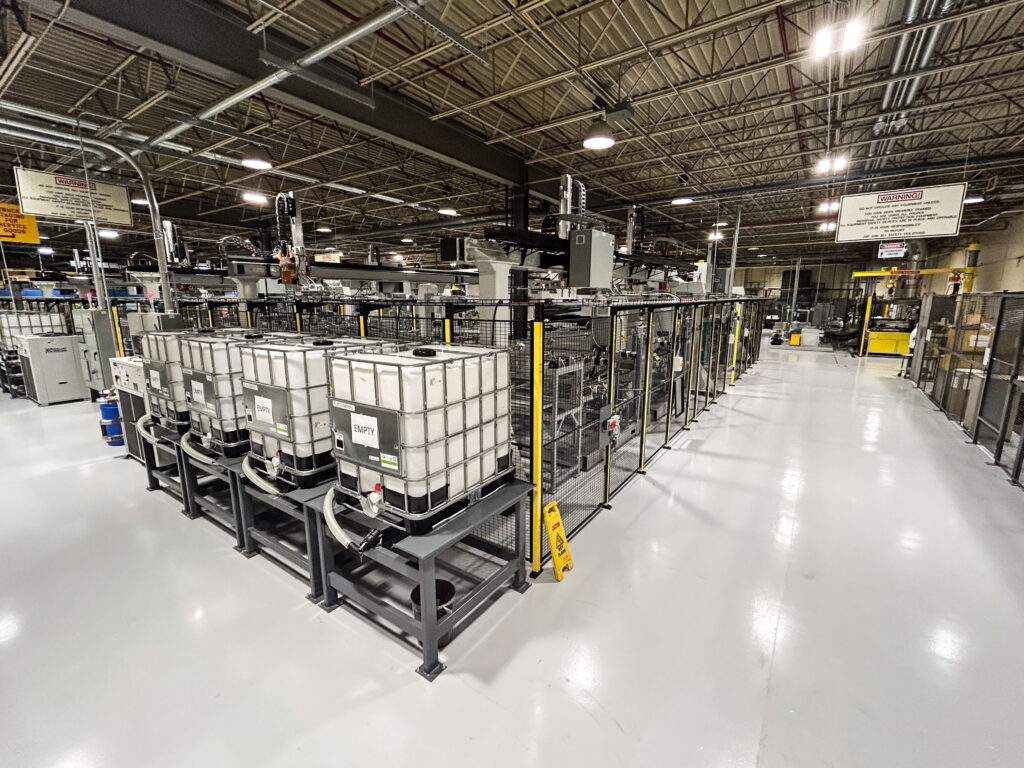
While “Substantial Completion” or “Temporary Certificate of Occupancy (TCO)” are significant milestones, equipment installation and commissioning, utility connections, operator training, and bringing security systems online need to be part of operational readiness planning. If these marks aren’t included in the schedule, production startup could remain weeks or months away, costing the company every day the facility is not producing. According to 2024 Senseye research, production downtime can cost owners from $36,000 per hour in the fast-moving consumer goods sector to $2.3 million per hour in the automotive sector.
The gap between turnover and production startup also represents unrealized capacity. Delivery targets are delayed, creating more backlog. Contract commitments may be impacted. Supply chain schedules can be disrupted.
More importantly, organizations are under contractual pressure to increase output and address backlog. Owners need construction partners who can deliver predictable outcomes for completed facilities, so they are ready to produce, not simply ready to occupy.
This represents a significant shift with manufacturing owners now asking builders: “When can production begin?”
That question alone changes how aerospace facility construction should be planned, designed, constructed, commissioned, and activated.
Why This Challenge Is Growing
Historically, manufacturing facilities could absorb lengthy startup periods. Production schedules were more predictable. Capital investments were planned over longer horizons, and capacity expansion often occurred at a slower pace.
Today’s aerospace and defense environment is different.
As production pressures increase, facility performance becomes more critical to owners and investors. For defense-related aerospace manufacturers, increasing production demands place greater emphasis on rapid capability delivery, efficient workflow, and predictable production capacity.
That changes the goal from simply building an industrial facility to creating a construction approach that can support delivery of a production-ready facility that can consistently produce a reliable flow of parts, equipment, and systems.
In this period of great need to resupply reserves and expand production, downtime is expensive, infrastructure complexity increases, and speed to production continuity becomes critical. With defense priorities expanding in response to global events, defense production output is critical.
The Five Pillars of Operational Readiness Construction
1. Utility Reliability and Infrastructure Resilience
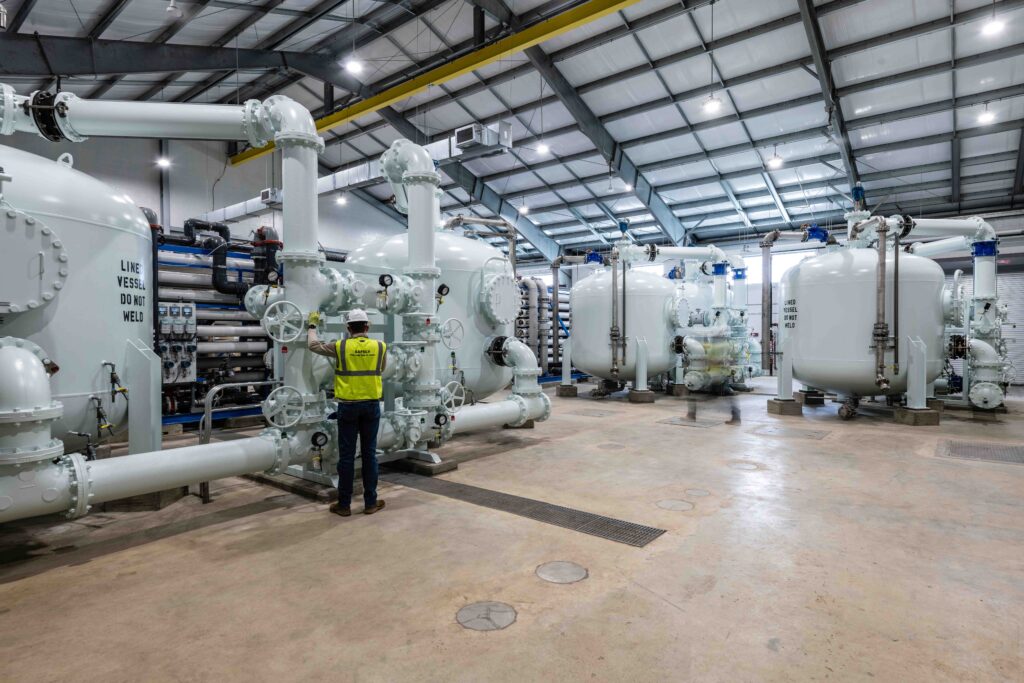
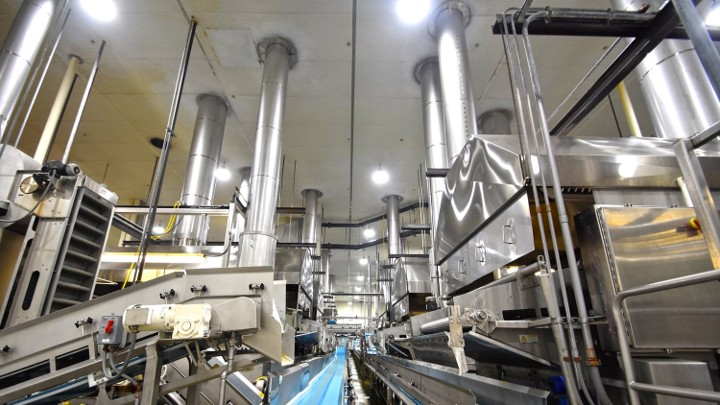
Manufacturing operations depend on reliable infrastructure performance. Power, cooling, compressed air, environmental controls, wastewater processing, network connections, emergency systems, and specialty-equipment power needs are often the foundation for consistent production capacity. Yet many organizations underestimate how closely production throughput is tied to utility and infrastructure reliability.
A facility can possess state-of-the-art equipment and highly trained operators, but if critical utilities and infrastructure cannot maintain consistent performance, with backup systems in place, production objectives become difficult to achieve.
Operational Readiness Construction includes designing and validating infrastructure capable of supporting real-world operating conditions.
Questions that should be answered before startup include:
- What happens during a power disruption?
- How quickly can systems recover?
- Are critical operations protected through redundancy?
- Are separate circuits established to protect critical equipment?
- Can future capacity demands be accommodated?
- Has infrastructure performance been validated under load?
Aerospace and defense manufacturers consistently prioritize redundancy, reliability, and utility resilience because these systems directly support production quality and continuity.
2. Equipment Integration
One disconnect in industrial projects often occurs between facility construction and manufacturing equipment deployment. Too often, construction and manufacturing systems are planned independently. Operational readiness seeks to eliminate that separation.
Successful aerospace and defense builders recognize that production equipment is not merely installed within a facility. It is fundamentally integrated with the facility’s infrastructure. Early engagement with specialty equipment suppliers helps align utility, power, and foundation requirements with installation, commissioning, and testing schedules to support production readiness at startup.
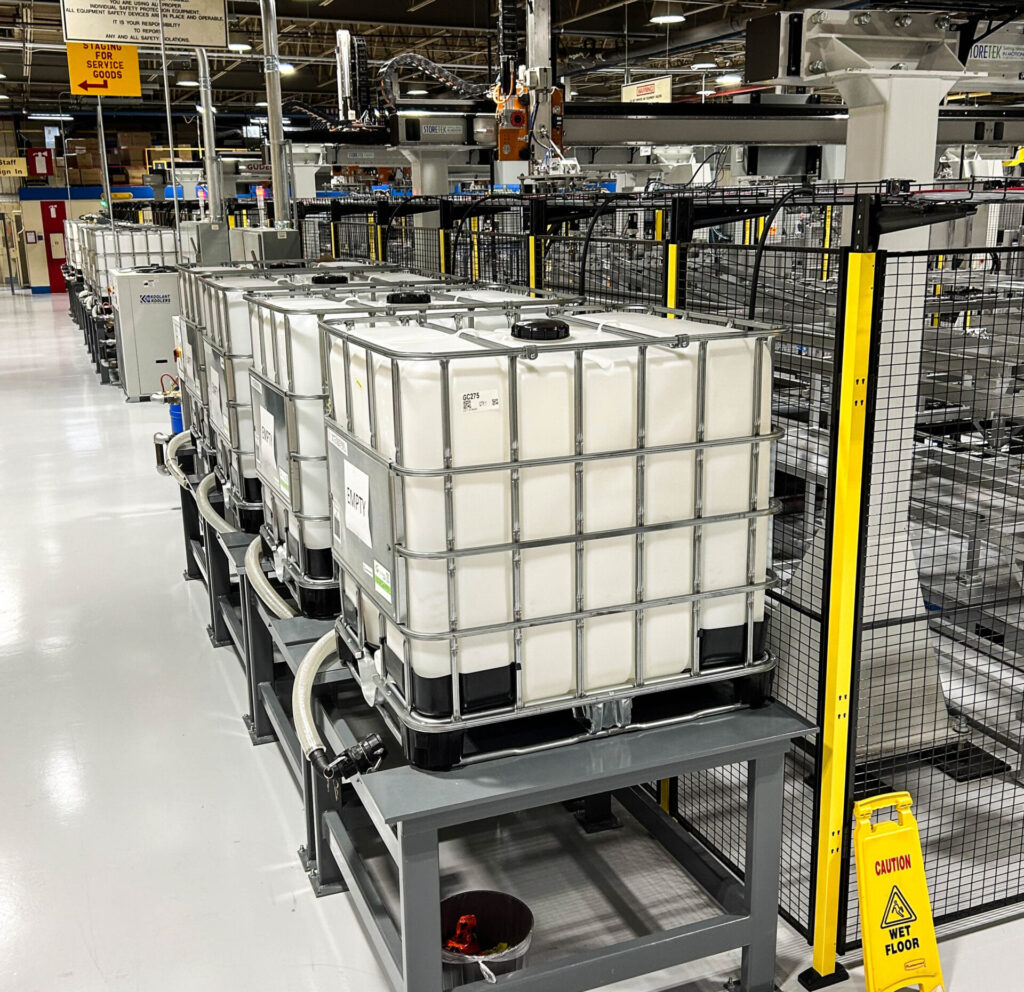
Manufacturing systems rely on utility capacity, integrated production controls, heating and cooling protection, fire and safety systems, and environmental protections. Carefully scheduling and phasing work around equipment installation and testing allows construction activities to progress while giving owners time to refine operational workflows, equipment layouts, and move-in planning. This proactive approach minimizes schedule impacts, maintains current production capacity, and positions the facility for a smoother transition into operations.
This is especially important in environments utilizing robotics, automation, advanced manufacturing technologies, coatings and specialized materials, precision production processes, or highly specialized equipment. Being able to start construction while these production needs are coordinated is to everyone’s advantage. The goal is to create an efficient schedule that helps control costs, increases safety and quality, and reduces risk exposure.
“Collaborative design-build best suits fast-track construction because it brings everyone to the table to explore options and solve challenges to ensure commissioning and startup meet both owner and contractual demands,” Root said.
When facility design, delivery, and equipment integration becomes a unified preconstruction plan, startup certainty increases.
3. Security Readiness
As security threats targeting facilities, data, and operational technologies become more sophisticated, security requirements continue to expand across the aerospace and defense sectors.
Owners and government contractors increasingly require:
- Secure manufacturing environments
- Classified spaces/ Sensitive Compartmented Information Facilities
- Controlled-access labs, testing spaces, and production areas
- Integrated security systems
- Redundant security systems for 24/7 uptime
- Cyber-physical security infrastructure
The challenge most construction companies face is recognizing that security is more than access control. Security requirements influence project sequencing, equipment lead time, commissioning strategies, construction operational procedures, and work crew movement throughout the facility and grounds. Security must be considered and agreed upon at every stage of the construction process.
Construction companies with experience delivering secure environments understand that security and speed are not competing priorities. Both can be achieved through intentional planning and coordination with facility security teams.
4. Commissioning Beyond Compliance
Traditional commissioning focuses on verifying individually installed systems function as intended. Operational Readiness Construction expands this objective. The goal is not simply to verify that individual systems operate as intended, but to validate that systems and equipment work together to support production on day one.
For example:
- Can environmental controls maintain safe manufacturing conditions for all workers?
- Have all equipment heat loads been accounted for and are rooms maintaining temperature at an acceptable level?
- Can redundant systems support continued operation during equipment or power failures?
- Can the current infrastructure and utilities support future expansion?
- Have emergency systems and backup processes been tested?
- Have security processes been validated?
- Have workflows been tested to confirm they can meet production output goals?
This approach transforms the standard building commissioning process from a closeout exercise into a readiness partnership. Instead of identifying issues after turnover, project and owner teams progressively reduce startup risk by examining and continuously testing key parts of the production ecosystem throughout the building process.
5. Activation and Startup Planning
Perhaps the most overlooked contributor to production readiness is activation planning. Activation planning ensures owners and investors achieve their production goals on schedule.
Effective activation planning addresses:
- Production-equipment startup sequencing
- Utility validation at full production
- Secure space certification
- Maintenance readiness
- Spare parts inventory, service, and warranty strategies
- Fire and environmental system certification
- The integrity of the roof
- Sound proofing
- Weather protection systems
Successful aerospace and defense projects build readiness milestones into project phases that begin during preconstruction planning and throughout construction to commissioning. As a result, startup becomes predictable and efficient.
Shifting the Industry’s Definition of Success
The construction industry has traditionally celebrated completion. Owners increasingly celebrate capability.
A facility that reaches planned production capacity in 24 months may ultimately deliver more value than one that finishes construction sooner but requires months to achieve full operational capability.
“How quickly can the facility reach production capacity?” is the question owners and investors ask because it directly impacts contractual commitments, revenue generation, and growth. More importantly, this is a metric that best aligns project delivery approaches with owner objectives. This shift requires construction teams to plan differently, lean into collaboration, and have a deeper understanding of equipment integration and operational planning.
Ultimately, aerospace general contractors must have a greater focus on planning, problem resolution, quality control, and facility functionality.
The Future of Aerospace and Defense Facility Delivery
The focus is shifting from completing facilities to accelerating the path to operational readiness and sustained production as a core competitive advantage.
Aerospace and defense requests for proposals will increasingly emphasize:
- Collaborative planning between owners, operations, engineers, equipment suppliers, and construction teams
- Careful utility planning to address
- Phased equipment integration and testing
- Production-ready commissioning
- Redundant infrastructure strategies
- Sequenced activation planning
- Maintaining production continuity during expansion
- Infrastructure and spaces capable of supporting security requirements
This evolution creates opportunities for both owners and construction companies. Contractors that embrace an operational readiness process can help owners reduce startup risk, accelerate the transition to production, improve reliability, and achieve faster returns on their capital investments.
The aerospace industry and DIB aren’t simply focused on building more facilities. Owners need resilient and future-ready facilities that can reach operational capability on an accelerated timeline. Given aerospace and defense owners’ needs to address financial risk, capitalize on business opportunities, and meet contractual requirements, this focus will likely extend to other advanced manufacturing sectors.
The Focus Going Forward
Operational Readiness Construction is not a buzzword or a future goal. It is a different way of thinking about aerospace and advanced manufacturing facility construction and delivery — one that connects construction decisions and phasing plans to enable production success from the very beginning.
For aerospace and defense owners and investors, that means recognizing that project success is measured not only by when construction ends, but by how quickly and reliably operations can begin.