
August 5, 2026 Insights
Tackling ‘Forever Chemicals’: Navigating PFAS Challenges in Water Systems
PFAS treatment is not simply about meeting regulations. It is about making sure communities have safe, reliable water for years to come.
“That starts with understanding the challenge and acting early,” said Eric Rees, Director of Preconstruction for Shook Construction.
Right now, water utilities across the country are hitting a massive wall. As per- and polyfluoroalkyl substances (PFAS) regulations take effect and public scrutiny increases, water treatment facility owners are under growing pressure to map out contamination risks, figure out advanced treatment tech, and stay compliant without putting undue burden on local ratepayers. It is a balancing act that is rapidly becoming a significant challenge for many local towns.
On April 10, 2024, the U.S. Environmental Protection Agency (EPA) announced the first federal drinking water standards for certain PFAS compounds, marking a significant shift in how drinking water systems must manage these contaminants. While regulatory requirements continue to evolve, addressing PFAS is not a back-burner issue anymore. These contaminants are already influencing water infrastructure planning, making it important for utilities to evaluate their options and prepare thoughtfully.
PFAS are a group of man-made chemicals commonly referred to as "forever chemicals" because they do not readily break down in the environment. Decades of use in industrial processes and consumer products have resulted in widespread contamination of soil and water. PFAS have been detected in drinking water systems serving more than 100 million Americans, and long-term exposure has been linked to serious health concerns.
As awareness has grown, PFAS contamination has evolved from a localized environmental issue to a nationwide concern. The result is a growing demand for water treatment projects and increasing expectations for owners to provide safe, reliable drinking water while meeting evolving regulatory requirements.
For water treatment plant owners, the impact is significant. PFAS brings regulatory uncertainty and requires specialized treatment technologies that can be complex and costly to implement. This introduces significant capital expenditures, operational considerations, and long-term maintenance requirements.
Owners are navigating regulatory standards alongside public expectations. Communities expect clean, safe drinking water, and transparency around remediation efforts is essential. At the same time, utilities must balance these expectations with budget constraints and ratepayer impacts.
Not A One-Size-Fits-All Solution
How can PFAS be removed from the water? Addressing PFAS contamination is not a one-size-fits-all undertaking. The chemical diversity of PFAS compounds, along with varying site conditions, requires tailored treatment strategies. Several technologies have emerged as effective solutions, each with its own advantages.
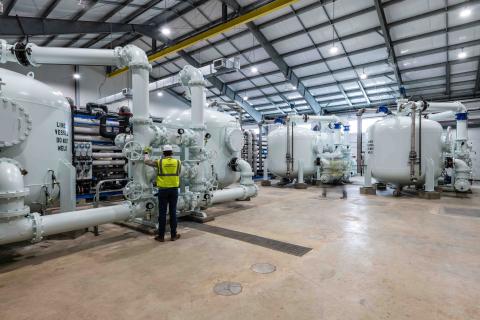
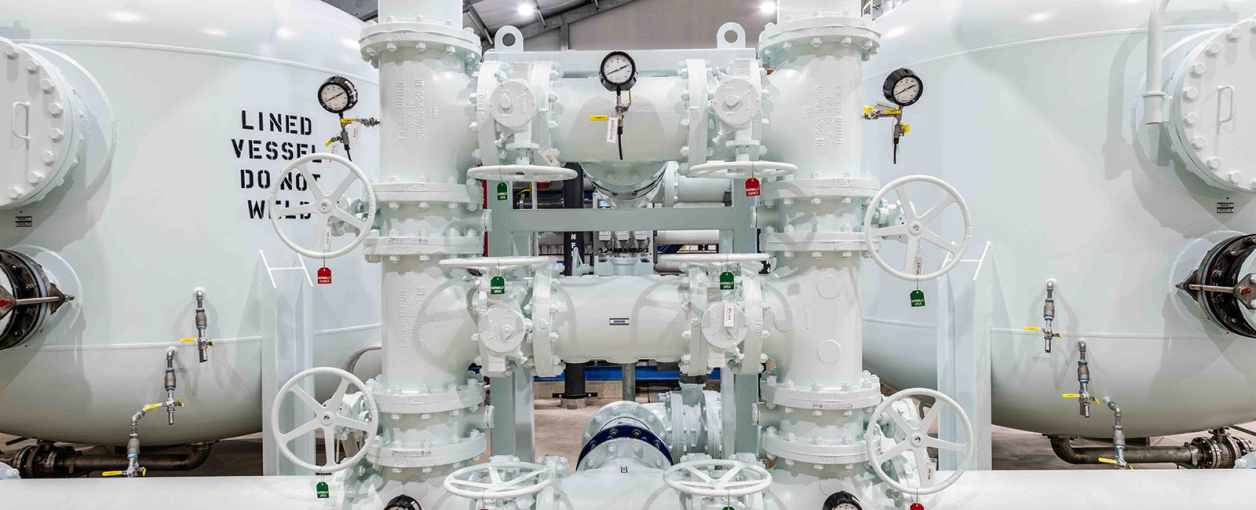
One way to efficiently eliminate PFAS from water is through granular activated carbon (GAC) treatment, or pressure filtration through GAC. GAC adsorbs the PFAS onto the surface of the carbon media, removing the contaminants. Another method is ion exchange treatment, where negatively charged PFAS contaminants adhere to positively charged specialized resin media and are removed from the water.
Every water source should be pilot-tested using the treatment technologies being considered to determine the best method. Other considerations, such as permits required for concentrate or disposal of spent media, should be analyzed during project planning and design to determine the best treatment technology and discharge disposal.
Project Delivery Considerations
Beyond selecting the right technology, the project delivery method plays a critical role in the success of PFAS remediation efforts. Many water treatment facilities must remain fully operational throughout construction, making careful planning and coordination essential. Owners are often challenged to balance regulatory deadlines, budget limitations, public expectations, and operational continuity while implementing complex treatment upgrades. Early collaboration among owners, designers, and construction teams can help identify risks and constructability issues while developing practical solutions that minimize disruption and maximize long-term value.
Funding and procurement considerations are also becoming increasingly important as communities work to address PFAS contamination. Federal and state funding programs have created opportunities to offset project costs, but navigating application requirements, funding milestones, and compliance obligations can be complex. At the same time, extended equipment lead times and growing demand for specialized treatment systems require advanced planning to avoid delays. Owners who engage experienced project partners early in the process are better positioned to secure funding, manage schedules, and implement treatment solutions that meet current regulations and future water quality goals.
Matthew Wilson, Project Manager for Shook Construction, emphasized the importance of taking a proactive, long-term approach to PFAS treatment planning:
“For owners, PFAS treatment is a long-term infrastructure investment. The decisions made today regarding this technology and funding strategies will impact system performance, operating costs, and public perception for decades. Taking a proactive approach allows owners to better manage risk and position their communities for future success.”
Applying Lessons Learned
As utilities across the country work to address emerging PFAS regulations, early projects provide valuable insights into the planning, coordination, and implementation required to successfully deliver treatment solutions. Owners are balancing complex regulatory requirements with constructability considerations, operational continuity, and long-term system performance.
With treatment technologies continuing to evolve, many owners are evaluating delivery approaches. Through collaborative delivery approaches, such as Progressive Design Build or Construction Manager at Risk, Shook works with experienced engineering and design partners to deliver integrated solutions that improve coordination, optimize project phasing, and support cost and schedule certainty throughout delivery.
Some of the earliest municipal PFAS treatment projects have highlighted both the challenges and opportunities associated with implementing new treatment requirements. Shook’s recently completed Renneker Water Treatment Plant in Maineville brought Ohio's first municipal PFAS removal system online through a project that required extensive planning, stakeholder coordination, piping design, and innovative project execution. Despite the challenges associated with a first-of-its-kind project, close collaboration among the owner, project team, and suppliers helped keep the project on schedule and within budget.
Projects like Renneker, which uses an ion exchange system, show how proactive planning and strong partnerships can help communities successfully implement PFAS treatment systems. Lessons from these early efforts are informing larger and more complex water infrastructure projects, including the Ottawa Water Treatment Plant project in Dayton, Ohio, an estimated $350 million investment where long-term resiliency and water quality remain key priorities.
While PFAS treatment can require significant investment, many communities view these improvements as an important step toward reducing potential health risks and supporting safe, reliable drinking water for future generations.
Navigating PFAS Projects Through Collaboration
PFAS is no longer a distant or emerging issue. As regulations continue to evolve and public awareness grows, the demand for effective, reliable treatment solutions will only increase. Water treatment plant owners are facing a new reality defined by heightened expectations, tighter regulations, and complicated funding approaches. Successfully navigating this landscape requires careful planning, technical expertise, and trusted partners.
Addressing PFAS requires careful planning, technical expertise, and thoughtful evaluation of treatment options. In addition to treatment performance, owners must consider constructability, operational impacts, permitting requirements, and long-term maintenance needs.
Today's water infrastructure demands precision, adaptability, and a strong commitment to safety. PFAS treatment projects often involve new process systems, phased construction, and integration with existing operations while maintaining compliance standards and uninterrupted service.
As communities continue to address PFAS contamination, proactive planning and collaboration among utilities, engineers, and contractors will be essential. By evaluating options early and taking a long-term approach to infrastructure planning, owners can position their systems to meet future requirements while continuing to provide safe, reliable drinking water.
 Shook and Kendall Electric Volunteer with Habitat for Humanity of Greater Dayton
June 21, 2023Mission
Shook and Kendall Electric Volunteer with Habitat for Humanity of Greater Dayton
June 21, 2023Mission
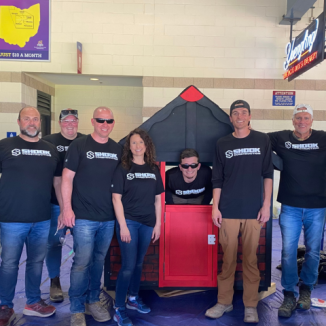 Maumee Valley Habitat for Humanity - Playhouse Project Blitz Build
June 16, 2023Mission
Maumee Valley Habitat for Humanity - Playhouse Project Blitz Build
June 16, 2023Mission
 14th Annual CJ Summer STEMM Camp
June 15, 2023Mission
14th Annual CJ Summer STEMM Camp
June 15, 2023Mission
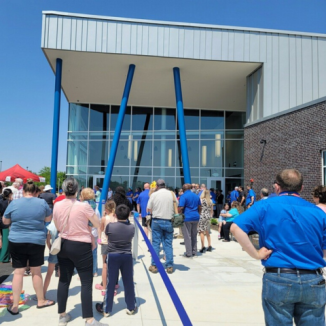 Dayton Metro Library Celebrates Huber Heights Branch Grand Opening
June 8, 2023News
Dayton Metro Library Celebrates Huber Heights Branch Grand Opening
June 8, 2023News
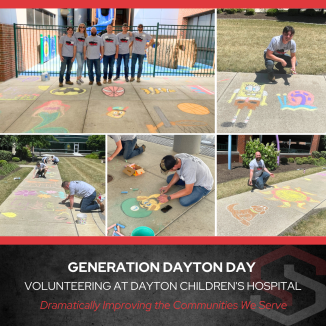 Generation Dayton Day - Volunteering at Dayton Children's Hospital
June 7, 2023Mission
Generation Dayton Day - Volunteering at Dayton Children's Hospital
June 7, 2023Mission
 Group Site Visit to Dayton Public Schools' Welcome Stadium Project
June 6, 2023News
Group Site Visit to Dayton Public Schools' Welcome Stadium Project
June 6, 2023News
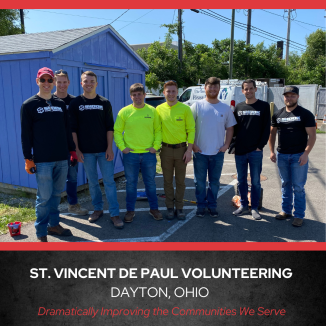 Volunteering at St. Vincent de Paul - Dayton, OH
June 2, 2023Mission
Volunteering at St. Vincent de Paul - Dayton, OH
June 2, 2023Mission
 Take a Sneak Peek inside Dayton Metro Library's newest branch
May 31, 2023News
Take a Sneak Peek inside Dayton Metro Library's newest branch
May 31, 2023News
 John Cleveland Wins 2023 Shook Core Value Award
May 30, 2023News
John Cleveland Wins 2023 Shook Core Value Award
May 30, 2023News
 Dayton Business Journal Top 100 Companies
May 26, 2023Awards
Dayton Business Journal Top 100 Companies
May 26, 2023Awards
 25 Shook Employees Volunteer with Habitat for Humanity of Greater Dayton
May 24, 2023Mission
25 Shook Employees Volunteer with Habitat for Humanity of Greater Dayton
May 24, 2023Mission
 One Shook, One Mission Food Drive
May 19, 2023Mission
One Shook, One Mission Food Drive
May 19, 2023Mission